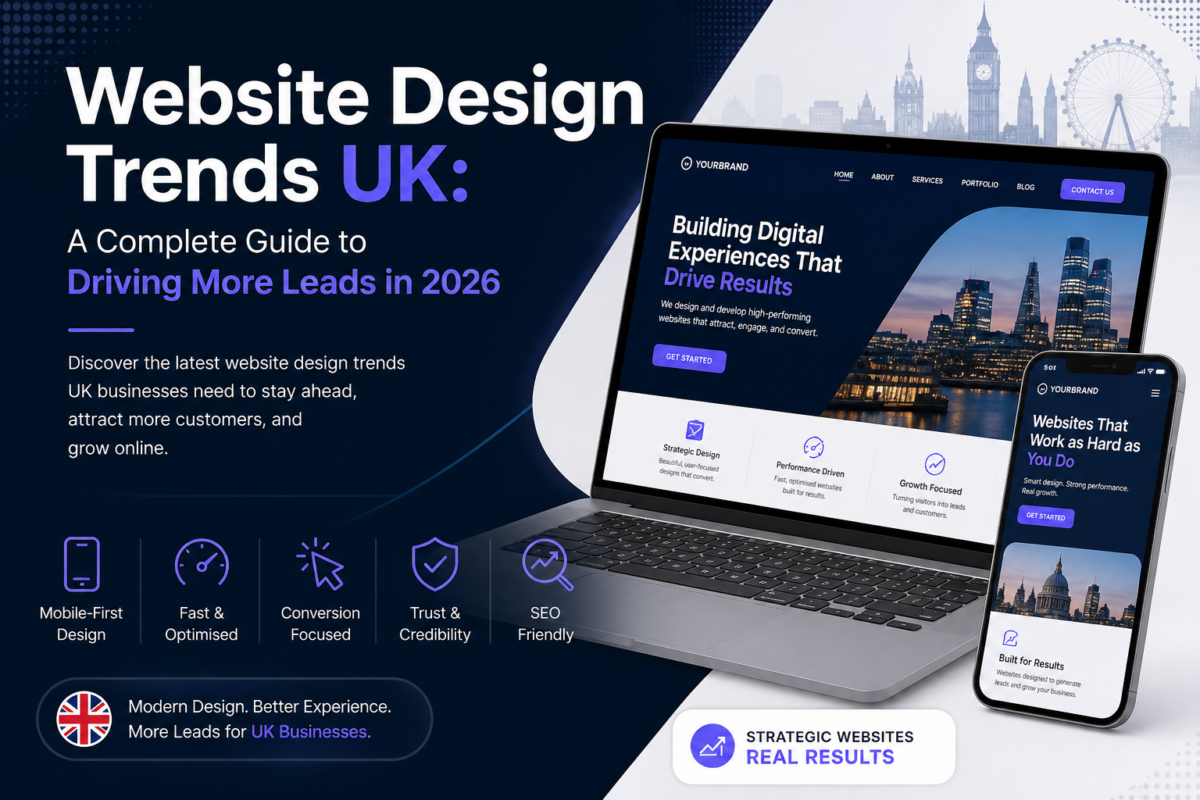
In today’s competitive digital landscape, keeping up with the latest Website Design Trends UK businesses are adopting is no longer optional; it’s essential.
Your website is often the first interaction potential customers have with your brand. A poorly designed site can instantly damage credibility, reduce engagement, and ultimately cost you revenue.
Whether you’re a law firm in London, a dental clinic in Manchester, or an e-commerce brand operating across the UK, your website needs to be fast, user-friendly, and strategically designed to convert visitors into customers.
In this guide, we break down the most important trends and how they directly impact your ability to generate leads and grow online.
Why Website Design Matters More Than Ever
UK consumers are increasingly digital-first. Whether they’re searching for local services, comparing providers, or shopping online, users expect seamless experiences.
A poorly designed website often results in:
- High bounce rates
- Low conversion rates
- Reduced trust and credibility
- Lost enquiries and sales
Modern website design isn’t just about aesthetics; it’s about performance, usability, and conversion.
1. Conversion-Focused Design
Gone are the days when websites acted as simple digital brochures. Today, every page must have a clear purpose: to drive action.
What This Means for UK Businesses
Industries such as:
- Estate agents in Birmingham
- Accountants in Leeds
- Construction companies in Liverpool
Need websites that guide users towards:
- Booking consultations
- Requesting quotes
- Making purchases
Key Features
- Clear call-to-action buttons
- Strategic page structure
- Lead capture forms
Conversion-focused design is one of the most impactful trends driving real business results.
2. Mobile-First Design
Over 60% of UK web traffic comes from mobile devices. If your website isn’t optimised for mobile, you’re losing customers, simple as that.
Essential Mobile Features
- Fully responsive layouts
- Fast loading speeds
- Easy navigation
- Clickable buttons and forms
This is especially critical for:
- Restaurants and hospitality
- Local service providers
- Healthcare clinics
Mobile optimisation is no longer optional; it’s expected.
3. Speed and Performance Optimisation
Website speed directly impacts both user experience and search rankings.
UK users expect pages to load in under 3 seconds; anything slower increases the risk of users leaving.
Why It Matters
- Improves Google rankings
- Reduces bounce rates
- Increases conversions
For e-commerce and SaaS businesses, even a one-second delay can significantly impact revenue.
4. Minimalist and Clean Design
Modern users prefer clarity over clutter. Clean, simple designs consistently outperform complex layouts.
Best Practices
- Use white space effectively
- Limit excessive colours and fonts
- Focus on clear messaging
This works particularly well for:
- Law firms
- Financial advisors
- Corporate brands
Minimalism enhances usability, and usability drives conversions.
5. Strong Visual Branding
Your website should consistently reflect your brand identity across every page.
Key Elements
- Cohesive colour schemes
- Professional typography
- High-quality imagery
For industries like beauty, retail, and hospitality, strong visuals directly influence purchasing decisions.
Brand consistency builds trust, and trust drives action.
6. Interactive and Engaging Features
Interactive elements are becoming a core part of modern web design, helping keep users engaged.
Examples
- Animations and micro-interactions
- Interactive forms
- Live chat functionality
These features are especially effective for:
- Recruitment agencies
- Education providers
- Service-based businesses
Engagement leads to longer session times and higher conversions.
7. SEO-Friendly Website Structure
A visually appealing website is useless if it can’t be found on Google.
SEO Essentials
- Proper heading structure
- Fast-loading pages
- Optimised images
- Clear site architecture
Combining design with SEO ensures your website ranks well and attracts consistent traffic.
8. Trust Signals and Social Proof
UK consumers are research-driven and cautious. Your website must establish credibility quickly.
Effective Trust Elements
- Client testimonials
- Case studies
- Certifications and accreditations
For industries like finance, legal, and healthcare, trust signals can significantly increase conversion rates.
Real-World Impact on UK Businesses
These trends aren’t just theory; they deliver measurable results:
- Dental clinics (London): Mobile-first design increases bookings
- E-commerce brands (Manchester): Faster speeds reduce cart abandonment
- Construction firms (Birmingham): Clear CTAs generate more enquiries
- Law firms (Leeds): Clean design builds credibility
Common Website Design Mistakes to Avoid
Even well-intentioned businesses make critical errors:
- Prioritising aesthetics over functionality
- Ignoring mobile optimisation
- Overloading pages with content
- Neglecting SEO
A strategic, balanced approach is key.
Why Work with a Professional Web Design Agency?
Implementing these trends effectively requires more than design skills; it requires strategy.
A professional agency can help you:
- Align design with business goals
- Improve conversion rates
- Enhance user experience
- Integrate SEO and performance
Get a Website That Actually Generates Results
If your website isn’t delivering leads or sales, it’s time for a strategic upgrade.
At BVS Digital, we create high-performance websites built to convert.
Whether you’re a local service provider or a national brand, we design websites that drive measurable growth.
👉 Ready to transform your website? Get in touch today.
Conclusion
The digital landscape is evolving rapidly, and staying competitive means adapting to the right website design trends.
From mobile-first design to conversion-focused layouts, these strategies go beyond aesthetics; they directly impact your ability to attract, engage, and convert customers.
If your website isn’t aligned with these trends, you’re likely missing valuable opportunities.
Invest in a smarter website, and turn your online presence into a powerful growth engine.
FAQs
What are the most important Website Design Trends UK businesses should follow?
How often should I update my website?
Mobile-first design, fast loading speeds, conversion-focused layouts, and SEO optimisation are the most critical.
Typically, every 2–3 years, to stay aligned with technology and user expectations.
Does website design affect SEO?
Yes. Speed, mobile responsiveness, and site structure directly influence rankings.
Can a better design increase leads?
Absolutely. A well-designed website improves trust, usability, and conversion rates, leading to more enquiries.