
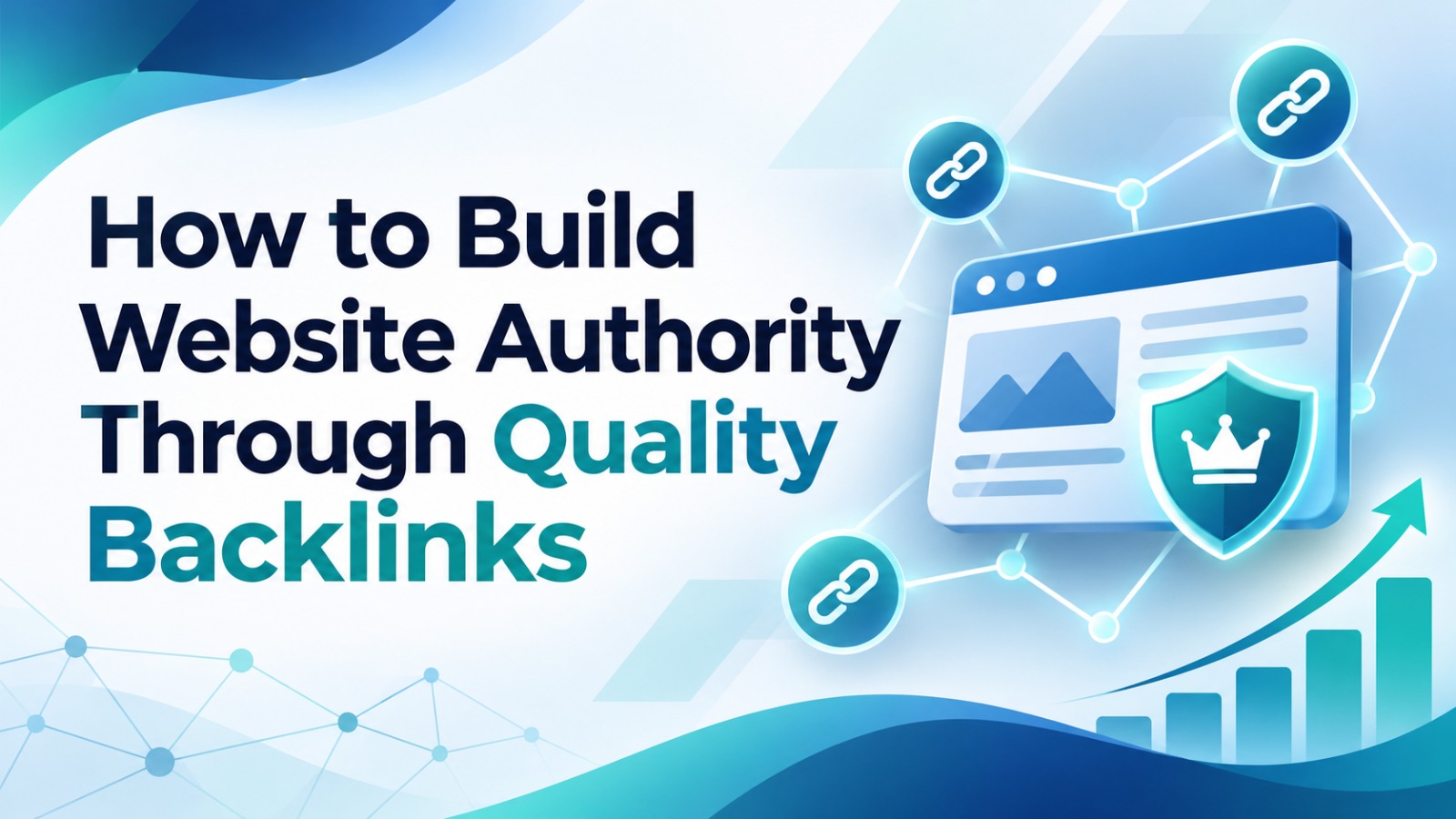
A respected website rarely earns trust from search engines through content alone. Other relevant websites can help people discover your expertise by linking to it. For UK businesses competing for valuable enquiries, quality backlinks form one part of a sustainable SEO strategy. The challenge is earning links that are genuinely useful, rather than collecting impressive-looking numbers.
This guide explains how to assess opportunities, create link-worthy resources, approach publishers and measure commercial impact. It also shows where specialist support from BVS Digital can make a difference.
Quick answer: how do you build website authority through backlinks?
Build website authority by earning quality backlinks from relevant, credible websites that have a genuine reason to reference your content. Publish original resources, contribute expert insight, develop industry relationships, and use targeted digital PR. Prioritise editorial relevance and referral value over link volume, while monitoring your backlink profile and avoiding manipulative schemes.
Why quality backlinks matter for UK business growth
A backlink is a link from another website to yours. Search engines can use links to discover pages and understand relationships between content. A relevant editorial mention may also introduce potential customers to your services before they search for your brand.
Think of a Manchester accountancy practice referenced by a respected regional business publication. That mention could bring interested visitors, establish professional credibility and support broader organic visibility. It does not guarantee a ranking improvement, but it creates a more useful signal than an unrelated directory listing.
Google explains that links help it discover pages and assess relevance in its link best practices. Strong on-page content, technical health and clear conversion paths remain essential alongside external mentions.
What makes a backlink genuinely valuable?
A high-quality link should make sense to a reader. It should appear in a credible context, point to an appropriate destination and be earned without pressure or manipulation. Third-party authority scores can help prioritise research, but they are not Google ranking metrics.
| Factor | Strong signal | Warning sign |
| Relevance | Industry or local audience overlap | Unrelated topics |
| Editorial context | Link supports a useful article | Link inserted without purpose |
| Audience | Real readership and potential referral visits | Obvious link-selling pages |
| Destination | Helpful, maintained resource | Thin or outdated landing page |
| Link pattern | Varied, natural references | Repeated exact-match anchors |
For a Bristol construction firm, a citation from a recognised trade association or local regeneration project can be more commercially meaningful than dozens of links from generic websites. Evaluate the publication and its audience, not only a numerical score.
How to earn quality backlinks: a practical seven-step plan
1. Audit your existing backlink profile
Start with Google Search Console and a reputable SEO platform to review linking websites, linked pages and anchor text. Identify useful existing relationships, broken destinations and suspicious patterns. Check whether your most commercially important service pages have supporting internal links from relevant articles.
Do not automatically disavow every unfamiliar link. Google can often assess spammy links without intervention; investigate carefully before taking action. An experienced digital marketing agency can help distinguish genuine risks from harmless noise.
2. Build assets worth citing
Publish something another writer would genuinely want to reference: a clearly sourced industry explainer, a practical checklist, an original survey with transparent methodology or a helpful comparison. A Leeds recruitment firm might create a guide explaining recruitment timelines by role, based on its own documented experience.
Keep these resources current and easy to navigate. For more on creating useful search-friendly resources, see the BVS Digital featured snippets guide. Strong visual summaries and concise answers make them easier to reference. Quality backlinks are more likely when the underlying page offers distinctive value beyond a generic sales pitch.
3. Find relevant publishers and organisations
Create a prospect list of trade publications, local business organisations, professional bodies, suppliers and community initiatives. Review each website manually for topical fit, readership, editorial standards and whether it publishes outside contributions.
For a Birmingham dental practice, legitimate opportunities may include local health education partnerships or community event coverage. Avoid targeting unrelated sites simply because an SEO tool reports a high authority score.
4. Use digital PR with a credible story
Journalists need information their readers will value. Offer a useful expert explanation, a genuinely newsworthy local initiative or verifiable original findings. Make the pitch concise and include clear evidence, named expertise and a suitable page for additional detail.
A Glasgow manufacturing business could share a documented apprenticeship initiative with regional media. The coverage should stand on its own merits; never make a link a condition of independent editorial reporting.
5. Develop relationships, not link exchanges
Contribute thoughtful insights to industry discussions, collaborate on educational events and maintain authentic supplier relationships. Relevant organisations may naturally reference your resources when they help their audiences. Excessive reciprocal linking and partner pages created solely for ranking manipulation are poor substitutes.
6. Recover legitimate missed opportunities
Look for unlinked brand mentions, outdated URLs and broken links to resources you still maintain. Politely request a correction where it benefits readers. If an old guide has moved, implement an appropriate permanent redirect rather than asking every publisher to update its link.
7. Support earned links with strong on-site SEO
As explained in BVS Digital’s guide to SEO for SMEs, link earning works best alongside on-page improvements. Link acquisition cannot compensate for slow pages, confusing navigation or weak service content. Connect educational resources to appropriate commercial pages using descriptive internal links. Review mobile usability, page intent, enquiry forms and analytics before increasing outreach.
Which link-building approaches suit different industries?
A sensible campaign reflects how customers research a particular sector. London solicitors may contribute commentary to specialist publications while observing professional conduct requirements. Sheffield trades businesses can share practical maintenance guides with credible community resources.
Hotels and restaurants can pursue genuine destination coverage, visitor guides and partnerships with local attractions. E-commerce retailers might publish original product research or responsible buying guides that relevant publishers can cite. Across sectors, the goal is qualified visibility rather than backlinks for their own sake.
Common link-building mistakes to avoid
- Buying links that pass ranking credit: Paid placements must be properly qualified; Google treats manipulative link buying as spam.
- Chasing volume: Hundreds of irrelevant placements rarely justify the reputational risk or wasted budget.
- Over-optimising anchor text: Repeating commercial keywords unnaturally can make a profile look manipulated.
- Sending mass outreach: Generic pitches waste editorial time and damage relationships.
- Ignoring conversion quality: Traffic without relevant enquiries does not establish commercial value.
Review Google Search Central’s spam policies before approving outsourced link building. Ask providers how placements are earned, whether relationships are disclosed and how they judge editorial quality.
How to measure a backlink campaign without vanity metrics
Track new referring domains and the context of each earned mention, but connect reporting to business outcomes. Use analytics and Search Console to review referral visits, non-branded search visibility, engagement and qualified enquiries. Assess trends over several months, accounting for seasonality and other marketing activity.
| Measure | Why it matters | Review question |
| Relevant referring domains | Shows breadth of editorial references | Are sources credible and on-topic? |
| Referral traffic | Captures direct audience value | Do visitors engage or enquire? |
| Organic landing pages | Shows visibility around priority content | Are useful pages gaining exposure? |
| Qualified enquiries | Connects activity to commercial outcomes | Which sources support real leads? |
| Link retention | Indicates durable earned coverage | Are valuable mentions still live? |
Use consistent campaign tagging where appropriate, record publication dates and keep a simple outreach log. Avoid promising fixed ranking positions or attributing every organic gain to links alone. Website authority grows through a combination of technical SEO, useful content and trusted recognition.
Should you outsource link building to an agency?
An in-house team may be best placed to provide specialist knowledge and approve public statements. An agency can contribute prospect research, content planning, publisher outreach and ongoing measurement. The strongest arrangement combines both: subject expertise from your business and disciplined delivery from marketing specialists.
When comparing link building services in the UK, ask to see the editorial selection criteria, example reporting structure, approval process and approach to Google policy compliance. Be cautious of guaranteed quantities of high-metric links without a credible explanation of how they are earned.
How BVS Digital can help build sustainable authority
Explore BVS Digital’s joined-up digital marketing approach and SEO guidance for UK businesses for wider context. BVS Digital approaches off-page activity as part of a wider digital growth plan. That means identifying commercial search opportunities, improving pages worth promoting and developing relevant content that supports outreach. The aim is to connect visibility with measurable business outcomes, not simply produce a backlink count.
Whether you serve customers in Liverpool, London or across the UK, a joined-up approach can align content, technical improvements and conversion-focused website journeys. Explore BVS Digital’s consultation options to discuss priorities and realistic next steps.
Conclusion: earn recognition that supports long-term growth
Quality backlinks are most useful when they reflect genuine expertise and send interested people to valuable pages. Start with an audit, build resources worth citing and pursue relevant editorial opportunities. Measure the impact on search visibility and enquiries rather than relying on arbitrary authority scores.
If your website has strong services but limited organic reach, BVS Digital can help assess how quality backlinks fit into a practical SEO plan. Contact BVS Digital to discuss your goals and the opportunities worth prioritising.
Frequently Asked Questions
How many backlinks does a UK business website need?
There is no universal target. The useful number depends on competition, the relevance of existing mentions, content quality and search intent. Focus on credible referring websites and meaningful enquiries rather than a fixed monthly quota.
Are paid backlinks safe for SEO?
Buying links to manipulate rankings breaches Google’s link spam policies. Advertising and sponsorship can be legitimate when links are appropriately marked with rel=”sponsored” or rel=”nofollow”. Ask suppliers to explain their methods before paying.
How long does it take for quality backlinks to help SEO?
There is no guaranteed timeframe. Discovery, indexing, competition and the overall quality of your website all influence outcomes. Monitor changes over months rather than expecting an immediate ranking jump after publication.
Can local businesses build backlinks without a large budget?
Yes. Local expertise, community partnerships, useful resources and authentic trade relationships can generate relevant editorial mentions. Prioritise a small number of well-matched opportunities and invest time in producing genuinely helpful information.