
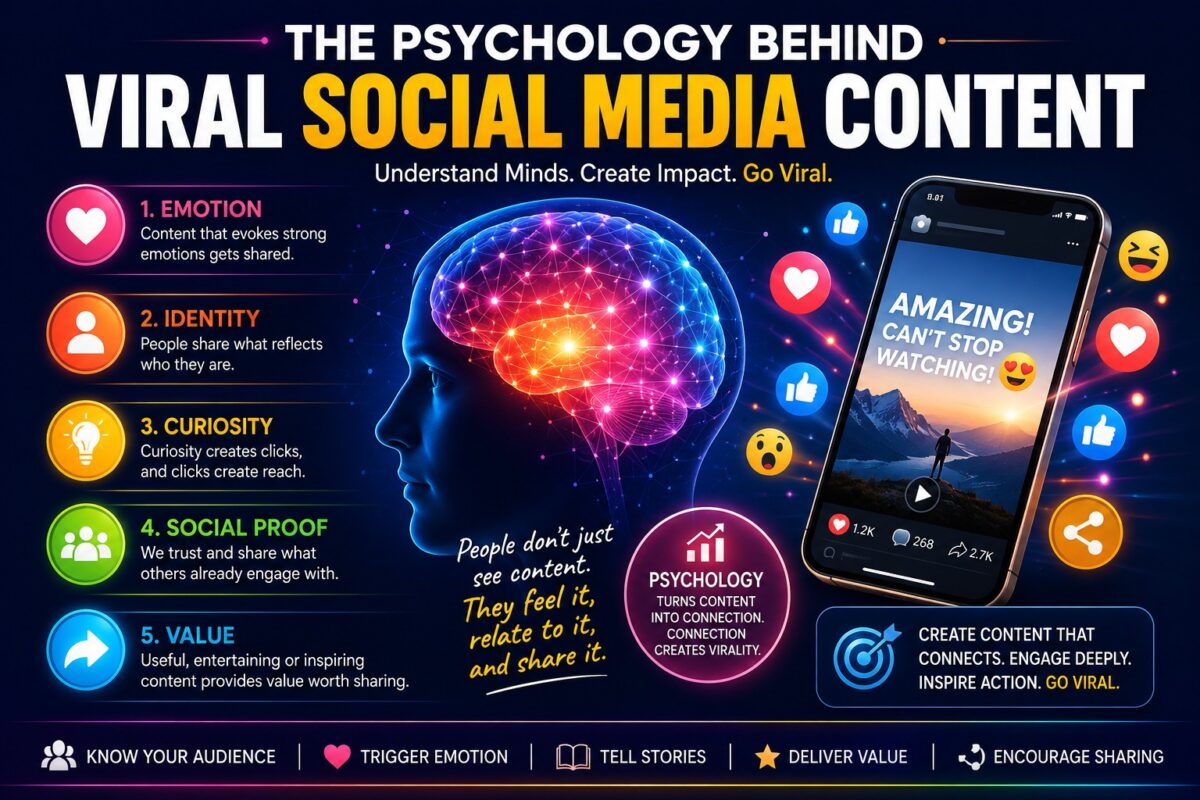
Every business wants social media content that captures attention, generates engagement, and spreads organically across platforms. Yet while some posts disappear unnoticed, others explode in popularity within hours.
The difference often comes down to psychology.
Viral Social Media Content is rarely accidental. Behind almost every successful campaign lies a deep understanding of human behaviour, emotional triggers, and audience psychology.
For UK businesses competing in crowded digital spaces, understanding why people share content is now essential. Whether you operate a restaurant in Manchester, a law firm in London, a beauty clinic in Birmingham, or an e-commerce brand selling nationwide, psychological principles can dramatically improve your social media performance.
Businesses that understand how audiences think, react, and engage can create stronger brand awareness, generate more enquiries, and increase conversions.
What Makes Viral Social Media Content Go Viral?
At its core, Viral Social Media Content triggers emotional or psychological responses strong enough to encourage people to engage and share.
Users do not share content randomly. They share content because it helps them:
- Express identity
- Connect socially
- Feel informed
- Entertain others
- Gain status
- Experience emotion
- Support causes or opinions
Google and social media algorithms increasingly reward content that generates meaningful engagement, including comments, shares, watch time, and saves.
This means psychology now plays a major role in digital marketing success.
The Key Psychological Triggers Behind Viral Content
1. Emotional Reactions Drive Sharing
Emotion is one of the biggest drivers of Viral Social Media Content.
People are far more likely to share content that creates strong emotional reactions such as:
- Happiness
- Surprise
- Inspiration
- Excitement
- Curiosity
- Empathy
- Humour
- Fear of missing out (FOMO)
For example, a hospitality business showcasing a dramatic hotel transformation video can create excitement and aspiration. A recruitment agency sharing an inspiring career success story can generate emotional connection and trust.
Emotional storytelling helps businesses appear more human and memorable.
2. People Share Content That Reflects Their Identity
Users often share content that represents who they are or how they want to be perceived.
For example:
- Fitness enthusiasts share motivational content
- Entrepreneurs share business insights
- Parents share relatable family content
- Professionals share industry expertise
This creates opportunities for businesses across multiple sectors.
A law firm may create educational content helping business owners understand legal risks. A financial services company might publish economic insights that professionals want to share with colleagues.
When content aligns with audience identity, engagement increases naturally.
3. Curiosity Encourages Clicks and Engagement
The human brain is naturally curious.
Headlines, captions, and video hooks that create information gaps encourage users to engage.
Examples include:
- “Most UK Businesses Make This SEO Mistake”
- “What Estate Agents Rarely Tell Sellers”
- “Why Your Website Is Losing Customers”
- “The Hidden Reason Your Ads Are Failing”
However, businesses must avoid misleading clickbait. Trust remains critical for long-term brand growth.
BVS Digital helps brands create strategic social media campaigns designed to balance engagement with credibility.
4. Social Proof Influences Behaviour
People trust content that others already engage with.
This psychological principle explains why posts with:
- High comment counts
- Large numbers of shares
- Positive reviews
- Customer testimonials
- User-generated content
often continue gaining momentum.
For example, beauty clinics showcasing genuine client transformations or restaurants reposting customer experiences create trust and encourage further interaction.
Social proof is especially powerful for industries where trust strongly influences buying decisions.
Why Short-Form Video Performs So Well
Platforms such as TikTok, Instagram Reels, Facebook Reels, and YouTube Shorts have transformed how audiences consume content.
Short-form video succeeds because it aligns with modern attention patterns.
It combines:
- Fast entertainment
- Instant emotional triggers
- Visual storytelling
- Easy consumption
- Algorithmic prioritisation
Businesses in sectors such as restaurants, automotive, fashion retail, construction, fitness, and hospitality often perform exceptionally well with short-form video content.
Examples include:
- Restaurant behind-the-scenes preparation videos
- Construction project progress transformations
- Estate agency property walkthroughs
- Dental clinic smile makeover showcases
- Retail product demonstrations
The Role of Storytelling in Viral Social Media Content
Humans naturally connect with stories.
Storytelling activates emotional and cognitive engagement far more effectively than promotional messaging alone.
Businesses that focus only on selling often struggle to gain meaningful social media traction.
Instead, effective storytelling can include:
- Customer journeys
- Founder stories
- Business challenges
- Behind-the-scenes content
- Employee experiences
- Transformation stories
- Industry insights
For example, a healthcare clinic explaining how a treatment improved a patient’s confidence creates emotional resonance beyond a simple service advertisement.
Why Authenticity Matters More Than Perfection
Audiences increasingly prefer authentic content over heavily polished advertising.
Consumers are becoming more sceptical of overly corporate messaging.
Businesses that appear relatable, transparent, and human often outperform brands relying entirely on polished promotional material.
This is particularly important for:
- SMEs
- Local businesses
- Professional services
- Trades and home services
- Healthcare providers
- Hospitality businesses
Authenticity helps build long-term trust and audience loyalty.
Platform Algorithms and Human Psychology
Social media algorithms are designed to prioritise content that keeps users engaged.
As a result, psychologically engaging content tends to receive:
- Higher reach
- Better visibility
- More recommendations
- Improved engagement
- Longer watch times
Platforms increasingly reward content that generates conversations and sustained interaction.
This means businesses must understand both audience psychology and platform behaviour simultaneously.
BVS Digital works with UK businesses to develop data-driven social media strategies designed for modern platform algorithms.
Industries That Benefit Most from Viral Social Media Content
Restaurants and Hospitality
Food visuals, customer experiences, and behind-the-scenes content perform strongly on visual platforms.
Beauty Clinics
Transformation content, skincare education, and client testimonials drive strong engagement.
Estate Agents
Property tours and market insights attract local attention and social sharing.
E-commerce Brands
Product demonstrations and trend-driven videos help increase product discovery.
Fitness and Wellness Brands
Motivational content and personal progress stories often generate high emotional engagement.
Construction Companies
Before-and-after transformations and project showcases perform well visually.
How UK Businesses Can Create More Viral Social Media Content
Focus on Audience Emotions
Ask:
- What emotions will this content create?
- Why would someone share this?
- Does this solve a problem or entertain?
Use Strong Hooks
The first few seconds or first line of a caption are critical.
Attention must be captured immediately.
Prioritise Video Content
Short-form video continues dominating social media engagement across platforms.
Encourage Interaction
Questions, polls, opinions, and community discussions improve algorithmic reach.
Post Consistently
Consistency helps businesses remain visible and relevant to audiences.
Analyse Performance Data
Successful viral strategies rely heavily on testing and optimisation.
Businesses should monitor:
- Watch time
- Shares
- Comments
- Saves
- Click-through rates
- Audience retention
Why Strategy Matters More Than Luck
While some viral moments happen unexpectedly, consistent social media success is usually strategic.
Businesses that combine:
- Audience psychology
- Creative storytelling
- Platform expertise
- Data analysis
- Consistent branding
- Strong visuals
are far more likely to produce effective Viral Social Media Content repeatedly.
For UK businesses competing online, professional strategy often makes the difference between random posting and measurable growth.
Grow Your Brand with Smarter Social Media Marketing
If your business wants to improve engagement, increase reach, and generate more leads through social media, understanding audience psychology is essential.
Whether you run an e-commerce store, hospitality brand, estate agency, healthcare clinic, or professional service business, strategic social media marketing can significantly strengthen your digital presence.
BVS Digital helps UK businesses create high-performing social media strategies built around audience behaviour, engagement psychology, and commercial growth.
Contact BVS Digital today to discuss how your business can create more effective Viral Social Media Content.
Frequently Asked Questions
What is Viral Social Media Content?
Viral Social Media Content refers to posts, videos, or campaigns that spread rapidly online through high levels of sharing, engagement, and audience interaction.
Why do people share viral content?
People typically share content that creates emotional reactions, reflects personal identity, entertains others, or provides valuable information.
Which platforms are best for viral social media marketing?
Platforms such as TikTok, Instagram, Facebook, LinkedIn, and YouTube can all support viral content depending on the audience and industry.
Can small businesses create viral social media content?
Yes. Small businesses often perform exceptionally well when they create authentic, engaging, and emotionally relevant content tailored to their audience.