
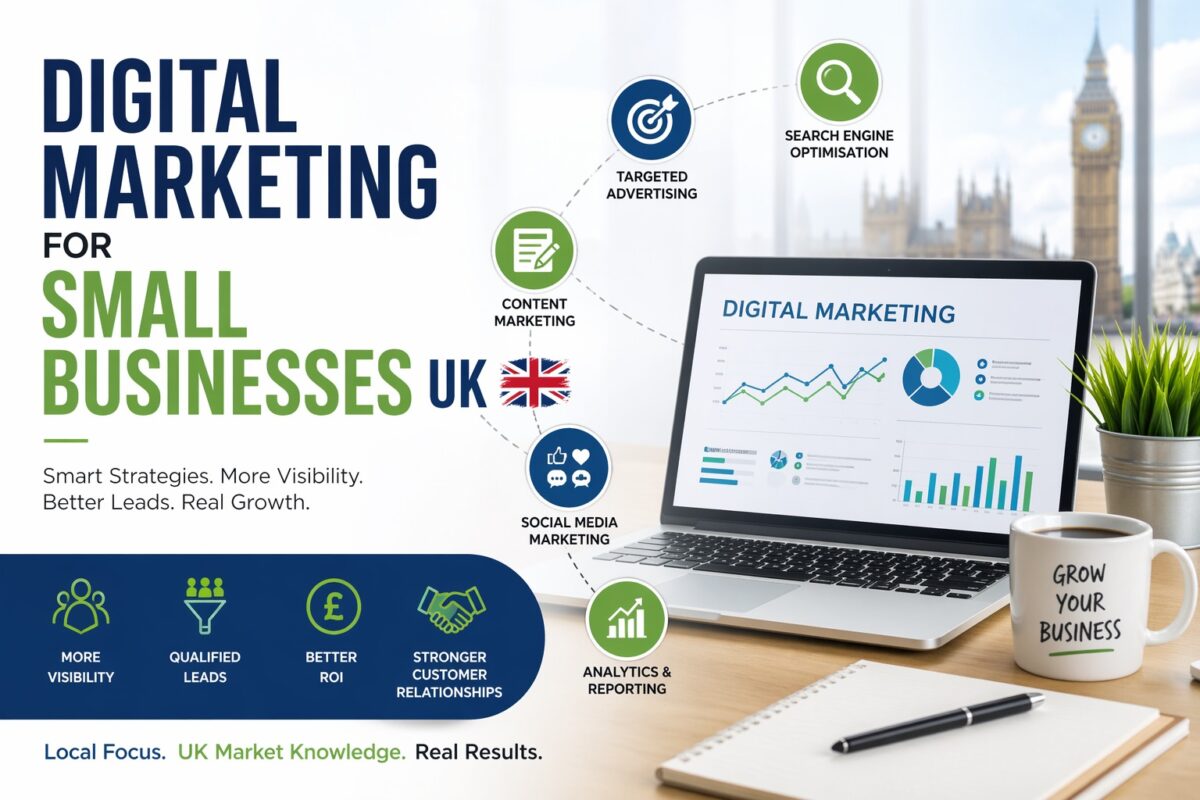
For many owners and marketing managers, digital marketing for small businesses UK is not about trying to outspend national competitors. It is about building a smarter strategy. Bigger brands may have larger budgets, in-house teams, and stronger name recognition, but smaller UK businesses often have advantages that matter more online: sharper positioning, faster decision-making, stronger customer relationships, and deeper local market knowledge.
If you run a law firm in Manchester, a dental clinic in Birmingham, a construction company in Leeds, an estate agency in Bristol, or an e-commerce brand selling across the UK, the challenge is usually the same. You need more visibility, more qualified enquiries, and a better return from your marketing without wasting budget chasing broad, expensive tactics that favour major brands.
That is exactly where the right digital strategy makes the difference. With a focused approach to search visibility, website performance, local intent, and conversion optimisation, smaller businesses can compete effectively online and win market share in the areas that matter most.
Why Smaller UK Businesses Still Have a Real Advantage Online
Large brands often dominate broad keywords, high-budget paid campaigns, and national awareness. However, online growth is not only decided by who spends the most. It is often decided by who understands the customer journey better and responds faster to what buyers actually want.
Small and medium-sized businesses can compete by focusing on:
- Niche relevance rather than broad appeal
- Local visibility instead of expensive nationwide competition
- Specialist messaging that speaks directly to a target audience
- Faster website improvements and campaign changes
- Better lead handling and more personal service
A regional accountant does not need to beat a national finance brand on every search term. They need to appear in front of the right local businesses at the right stage of intent. A specialist recruitment agency does not need millions of impressions. It needs qualified employers and candidates. A home services company does not need brand fame across the UK. It needs strong visibility in the service areas that generate profitable enquiries.
Start with a Clear Positioning Strategy
One of the biggest mistakes smaller businesses make is trying to sound like a larger generic brand. That usually weakens the message and makes the business easier to ignore.
Strong digital marketing for small businesses UK starts with clarity. Your website and campaigns should make it obvious:
- Who you help
- What you specialise in
- Which locations you serve
- Why a buyer should choose you over alternatives
For example, a legal firm might position itself around employment law for SMEs in London. A beauty clinic might focus on premium non-surgical treatments in Liverpool. A training provider might target compliance-led corporate learning for UK businesses. This kind of positioning is easier to rank, easier to market, and easier to convert than vague, broad messaging.
If your current website tries to be everything to everyone, your first competitive move is not necessarily more traffic. It is a more precise offer.
Use SEO to Win High-Intent Traffic, Not Vanity Traffic
Search engine visibility remains one of the most powerful ways for smaller businesses to compete because SEO rewards relevance, structure, quality, and consistency. It is not reserved for major brands.
Focus on intent-led keyword targeting
Instead of targeting broad phrases with heavy competition, smaller businesses should prioritise commercial searches tied to services, problems, and locations.
Examples include:
- family solicitor in Sheffield
- dentist for composite bonding in Glasgow
- warehouse recruitment agency Leeds
- SEO for estate agents UK
- PPC management for accountants
These terms may attract lower search volume than broad head terms, but they often produce stronger lead quality and better conversion rates. That is a far better growth model for SMEs.
Build pages around real services and real locations
Service pages, sector pages, and location pages can help smaller brands compete where purchase intent is strongest. A construction firm can create pages for design-and-build services in specific areas. A dental clinic can create dedicated pages for Invisalign, implants, and hygiene appointments. A SaaS company can produce pages focused on industry use cases rather than generic software claims.
When supported by a strong SEO strategy, these pages help your business rank for the searches that actually generate revenue.
Local SEO Is Often the Fastest Way to Compete
For service-led businesses, local search is one of the biggest opportunities online. Many SMEs underestimate how often buyers search with local intent, even when they do not include the town or city in the keyword.
If you operate in London, Birmingham, Manchester, Leeds, Bristol, Sheffield, Glasgow, or Liverpool, your digital visibility needs to reflect your geographic market. Local SEO helps smaller businesses appear in map results, local organic listings, and service-driven searches where larger national brands may be less relevant.
This matters especially for:
- law firms
- accountants
- dental and healthcare clinics
- estate agents
- trades and home service businesses
- hospitality venues
- recruitment agencies
Key local tactics include:
- fully optimised service and location pages
- consistent business details across platforms
- review generation and response management
- location-focused content
- local internal linking and schema-led page structure
A smaller business that dominates its local service area can generate more commercially relevant traffic than a larger brand trying to compete nationally with generic messaging.
Content Helps Small Businesses Build Authority Faster
Big brands often rely on recognition. Smaller businesses need to build trust more deliberately. Content plays a critical role here.
The right content strategy helps SMEs answer buyer questions, demonstrate expertise, improve SEO depth, and support conversion. This is especially important in trust-led sectors such as law, finance, healthcare, property, and professional services.
Useful content themes include:
- service comparison pages
- industry-specific landing pages
- guides that explain buying decisions
- articles addressing objections and misconceptions
- content tailored to UK regulations, market behaviour, or local demand
For example, an accountancy practice could publish content for contractors, landlords, and limited companies. A real estate business could create local area pages and seller advice content. An e-commerce brand could produce category buying guides and comparison pages that support both rankings and transactions.
Done properly, content is not filler. It becomes a commercial asset that attracts demand and moves prospects closer to enquiry.
Your Website Must Convert Better Than the Bigger Brand
Getting traffic is only half the job. Smaller businesses often compete best by converting more of the traffic they already have.
A large brand may generate thousands of visits but still lose enquiries through slow pages, generic calls to action, weak trust signals, or poor mobile UX. SMEs can outperform by creating simpler, clearer journeys.
What a conversion-focused website should include
- clear service-led headlines
- strong location and sector relevance
- visible trust indicators and credentials
- simple navigation
- mobile-first forms and contact options
- calls to action placed throughout key pages
If your website looks good but does not generate leads, it is not performing. Effective website design and development should support sales enquiries, bookings, quote requests, and consultations rather than simply presenting information.
A dental clinic should make appointment booking frictionless. A law firm should make consultation requests obvious. A recruitment agency should separate candidate and client journeys clearly. A retailer should reduce drop-off between product view and checkout.
Smaller Budgets Need Smarter Paid Media
Paid advertising can still play an important role, but smaller businesses should avoid using it as a blunt instrument. Competing head-on with bigger brands across broad Google Ads campaigns can become expensive very quickly.
Instead, paid media works best when it supports a focused commercial objective, such as:
- launching a new service
- targeting a high-value location
- capturing bottom-of-funnel searches
- retargeting previous website visitors
- testing demand before scaling SEO and content
For example, a private clinic might use paid search for high-intent treatment terms while growing organic visibility over time. An e-commerce business might run shopping or remarketing campaigns for top-performing categories rather than pushing every product line equally.
This is where integrated thinking matters. Strong digital consultancy helps small businesses allocate budget where it can create commercial momentum, not just temporary clicks.
Compete on Trust, Not Just Traffic
When buyers compare a small business with a larger brand, they often ask one central question: can I trust this company?
Your digital presence should answer that immediately. Trust-building assets include:
- clear service explanations
- transparent contact details
- industry credentials
- real testimonials
- case-study style proof where appropriate
- professional branding and messaging consistency
This matters across almost every sector. A financial services firm needs authority. A construction company needs reassurance. A beauty clinic needs confidence and professionalism. A manufacturing business needs reliability. Trust closes the gap between a smaller business and a larger competitor much faster than brand size alone.
How Small UK Businesses Should Prioritise Their Next 90 Days
If you want practical momentum, focus on the highest-impact actions first. For most SMEs, the next 90 days should look like this:
Month 1: Fix positioning and core pages
- clarify your target audience and core services
- rewrite service pages around commercial intent
- improve calls to action and contact pathways
Month 2: Strengthen visibility
- optimise for local and service-based search terms
- create priority landing pages
- improve internal linking and technical foundations
Month 3: Build authority and improve conversion
- publish strategic content
- test landing page improvements
- review performance by leads, not just traffic
This is the essence of effective digital marketing for small businesses UK. It is structured, commercially focused, and aligned with the way buyers actually search and compare suppliers online.
Why This Matters for UK Industries Right Now
Competition is increasing across nearly every sector. Law firms are fighting for visibility in crowded city markets. Accountants are competing for high-value SME clients. Estate agents need more valuation enquiries. Dental clinics need consistent bookings. Recruitment agencies need both candidates and employers. E-commerce brands need profitable acquisition, not just traffic spikes.
In all of these sectors, smaller businesses can compete successfully when they focus on precision, visibility, trust, and conversion rather than trying to mimic the scale of larger players.
Work with a Partner That Builds Smarter Growth
BVS Digital helps UK businesses compete online with joined-up strategies built around commercial results. Whether your business needs stronger search visibility, a better-performing website, more qualified enquiries, or a clearer digital roadmap, the goal is the same: build a system that turns online activity into measurable growth.
If your business is ready to compete more effectively online, explore how BVS Digital supports UK brands through full-service digital marketing and speak to the team about a tailored growth plan.
Ready to Compete More Effectively Online?
Small businesses do not need the biggest budget to win online. They need sharper positioning, stronger local visibility, better-performing pages, and a strategy built around qualified demand.
If you want a practical, commercially focused approach to digital marketing for small businesses UK, contact BVS Digital to discuss how your business can improve visibility, generate better leads, and compete with confidence.
Conclusion
The gap between a small business and a larger brand online is often smaller than it appears. Search engines reward relevance. Buyers respond to clarity. Conversions improve when websites are built around real user intent. That gives SMEs across the UK a real opportunity to compete and grow.
With the right digital strategy, smaller businesses can stop chasing bigger brands on their terms and start winning on their own.
Frequently Asked Questions
Can small businesses really compete with larger brands online?
Yes. Small businesses can compete by targeting niche services, focusing on local SEO, improving website conversions, and creating stronger, more relevant messaging for specific customer groups.
What is the most effective channel for small business growth online?
That depends on the business model, but SEO, local search visibility, and conversion-focused website improvements often provide the strongest long-term return for service-led UK businesses.
How long does digital marketing take to show results?
Some improvements, such as conversion changes and landing page updates, can have an immediate impact. SEO and content strategies usually build momentum over several months and strengthen over time.
Why should SMEs invest in digital marketing instead of relying on referrals?
Referrals are valuable, but they are unpredictable. Digital marketing creates a more consistent lead generation system, helps businesses reach new buyers, and reduces reliance on word of mouth alone.