
Generating website traffic is relatively easy compared with generating enquiries from people who are genuinely interested in buying. This is where experienced digital marketing agencies can add real commercial value. Rather than treating SEO, paid advertising, social media and websites as separate activities, an agency can connect them into a structured system designed to attract, qualify and convert potential customers.
For UK SMEs, professional services firms, retailers, healthcare providers, trades and growing e-commerce brands, the objective should not simply be more clicks. The real goal is a consistent flow of qualified opportunities that can become customers and revenue.
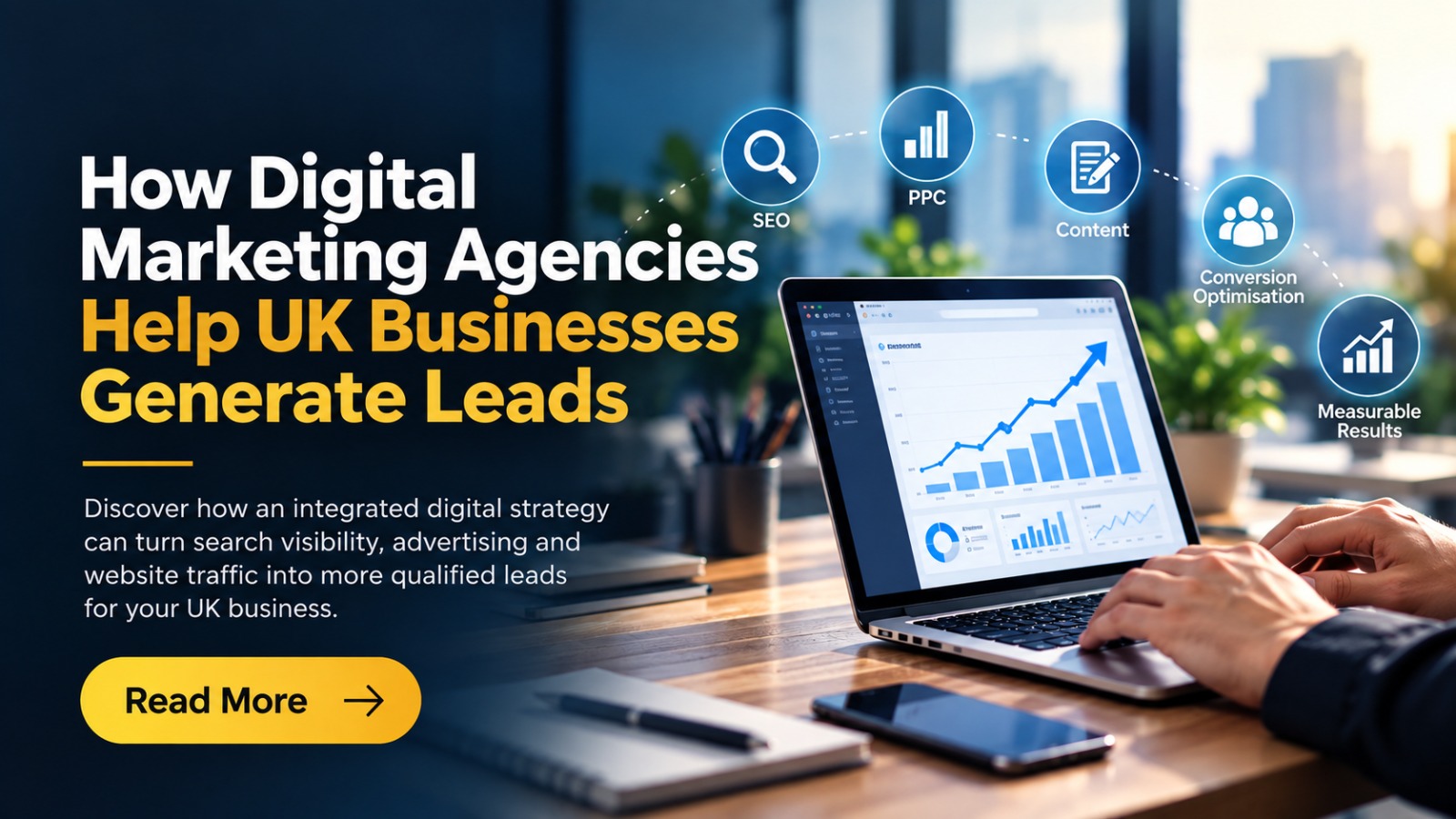
Digital marketing agencies help UK businesses generate leads by identifying the right audiences, increasing visibility across search and advertising channels, improving website conversion journeys and measuring which marketing activity produces genuine enquiries. The strongest approach combines SEO, PPC, content, conversion optimisation and accurate lead tracking around clear commercial objectives.
Why Lead Generation Is a Bigger Challenge Than Increasing Traffic
A business can attract thousands of website visitors without generating enough sales opportunities. Traffic has limited commercial value when visitors are poorly targeted, landing pages are confusing, or nobody can identify which marketing channel produced the enquiry.
A construction company may receive visits from people researching building costs but need commercial project enquiries. An accountant may attract readers looking for free tax information while wanting company owners who require ongoing accounting support.
Likewise, a dental clinic in Birmingham, estate agent in Manchester or solicitor in London needs prospects with relevant location, service requirements and buying intent.
Effective digital marketing agencies therefore look beyond traffic volume. They consider who the business wants to reach, what those customers search for, what information influences their decision, and what should happen after they arrive on the website.
How Digital Marketing Agencies Build a Lead Generation System
A successful lead generation strategy usually involves several connected stages. Each stage moves a prospective customer from initial discovery towards an enquiry, booking, quotation request or purchase.
1. Start with Commercial Objectives and the Right Audience
Lead generation should begin with the business rather than the marketing channel. Before increasing advertising budgets or publishing more content, an agency should understand what a commercially valuable lead actually looks like.
This can involve identifying:
- Priority services or products
- Target customer groups
- Geographic markets
- Typical buying journeys
- Average sales cycles
- Most profitable service areas
- Common customer questions and objections
- Existing lead sources and conversion weaknesses
A company serving customers across London, Manchester, Birmingham and Leeds may require a different strategy from a local trades business operating within a 20-mile radius.
BVS Digital’s digital consultancy services can help businesses connect individual marketing activities with broader customer acquisition and growth objectives.
2. Use SEO to Capture Existing Search Demand
Search engine optimisation is particularly valuable because it can connect businesses with customers who are already researching a problem, service or purchase.
Google’s SEO Starter Guide explains that SEO helps search engines understand content while helping users discover websites through search.
For lead generation, keyword selection needs to reflect commercial intent rather than simply search volume.
Examples might include:
- “commercial accountant Manchester”
- “family solicitor London”
- “emergency plumber Birmingham”
- “cosmetic dentist Leeds”
- “commercial construction company Bristol”
- “recruitment agency Glasgow”
These searches often indicate a clearer requirement than broad informational terms.
Strong search engine optimisation can combine technical SEO, service pages, useful content, local optimisation and internal linking to improve visibility for searches relevant to actual business opportunities.
Good digital marketing agencies also recognise that rankings alone are not the objective. Search traffic needs to reach pages capable of answering questions and encouraging the next action.
3. Use PPC to Reach High-Intent Prospects Faster
SEO can build long-term organic visibility, while paid advertising can place a business in front of potential customers more quickly.
Google Ads can be particularly useful when people are actively searching for a service. Paid social campaigns can support awareness, remarketing and demand generation where customers are less likely to begin with a direct search.
Effective PPC lead generation requires more than selecting keywords and setting a budget. Campaign structure should consider search intent, location, audience quality, landing pages and conversion tracking.
Google describes conversion tracking as a way to measure actions such as leads, calls and other valuable customer activities resulting from advertising. Businesses can read Google’s current conversion tracking guidance when reviewing measurement.
BVS Digital’s paid advertising services are designed to connect paid media activity with lead generation and business outcomes rather than focusing on clicks alone.
4. Turn the Website into a Lead Generation Asset
Marketing cannot compensate indefinitely for a website that makes conversion difficult.
Potential customers may abandon a site because the service offering is unclear, pages load poorly on mobile, calls-to-action are weak, or forms require unnecessary information.
A lead-focused website should quickly answer four questions:
- What does this company offer?
- Is the service relevant to my requirement?
- Why should I trust this business?
- What should I do next?
For an estate agency, the primary conversion may be a valuation request. A dental clinic may prioritise appointment bookings, while a B2B manufacturer might need specification enquiries or quotation requests.
This is why effective digital marketing agencies consider website design, content and conversion rate optimisation part of lead generation rather than separate creative projects.
5. Improve Conversion Rates Before Simply Buying More Traffic
Increasing the advertising budget is not always the most efficient way to generate more enquiries. Sometimes the greater opportunity is converting more of the traffic the business already receives.
Conversion rate optimisation can involve:
- Simplifying forms
- Improving mobile journeys
- Strengthening calls-to-action
- Making pricing or service information clearer
- Reducing unnecessary navigation
- Adding relevant trust signals
- Improving landing-page messaging
- Testing alternative page structures
Businesses already investing in SEO or advertising can therefore benefit from examining where visitors leave before increasing acquisition costs.
BVS Digital provides conversion rate optimisation support to help businesses identify friction and create clearer paths towards enquiries and sales.
How Different Digital Channels Contribute to Lead Generation
| Channel | Lead Generation Role | Best Used For | Important Measurement |
| SEO | Captures organic search demand | Long-term visibility and high-intent searches | Qualified organic enquiries |
| Google Ads | Provides immediate paid search visibility | Services with clear search demand | Cost per qualified lead |
| Paid Social | Reaches targeted audiences | Awareness, offers and remarketing | Lead quality and acquisition cost |
| Content Marketing | Educates and builds confidence | Complex or considered purchases | Assisted leads and conversions |
| Local SEO | Improves location-based discovery | Local and multi-location businesses | Calls, bookings and local enquiries |
| CRO | Improves conversion from existing traffic | Sites already generating visitors | Conversion rate and lead quality |
The strongest results often come when these activities support each other. Search data can identify content opportunities, PPC can reveal high-converting keywords and website analytics can show which landing pages need improvement.
Content Helps Prospects Move Towards a Decision
Not every customer is ready to enquire during their first interaction with a business.
A business buyer may compare several software providers. Someone considering a cosmetic treatment may research procedures, costs and aftercare. A homeowner choosing a construction company may want evidence of expertise before requesting a quotation.
Content can support these decisions through service guides, buyer guides, FAQs, comparison pages, videos and practical articles.
The key is commercial relevance. Publishing content simply to increase the number of indexed pages rarely creates an effective lead strategy.
Experienced digital marketing agencies map content against customer questions and stages of the buying journey, helping prospects move from research towards action.
Local Lead Generation for UK Service Businesses
Local visibility is especially important for dentists, estate agents, law firms, accountants, trades, clinics, restaurants and home service businesses.
A customer searching for a service in Bristol is unlikely to respond to exactly the same location signals as someone searching in Liverpool or Sheffield.
Local lead generation can include:
- Google Business Profile optimisation
- Service and location landing pages
- Consistent business information
- Local keyword targeting
- Customer review management
- Locally relevant website content
- Location-based paid advertising
Multi-location businesses need additional care. Each branch should have a useful local presence rather than dozens of near-identical pages with only the town name changed.
Tracking Leads Is Essential for Better Marketing Decisions
A marketing dashboard can show impressive traffic, impressions, and clicks while the sales team reports very few useful opportunities.
This disconnect is why lead tracking matters.
Good digital marketing agencies aim to understand not only where forms originated but whether those enquiries became genuine prospects and customers.
Useful performance indicators may include:
- Qualified leads by channel
- Cost per qualified lead
- Conversion rate by landing page
- Calls generated from marketing
- Appointment or consultation bookings
- Opportunities created in the CRM
- Customer acquisition cost
- Revenue influenced by marketing
This information allows budgets to move towards channels and campaigns that contribute more effectively to commercial growth.
Lead Generation Must Also Consider UK Privacy Requirements
Collecting contact information brings responsibilities alongside commercial opportunities.
The Information Commissioner’s Office provides detailed direct marketing guidance covering areas such as UK GDPR, PECR, privacy information and responsible use of personal information.
Businesses should review their forms, tracking technology, CRM processes and direct marketing activity appropriately. Where necessary, legal or specialist privacy advice should support the marketing implementation.
Professional digital marketing agencies should therefore treat privacy and measurement as part of campaign planning rather than something considered after leads have already been collected.
Examples of Lead Generation Across Different UK Industries
Law Firms and Professional Services
A law firm could target service-specific searches through SEO and Google Ads, then direct visitors towards pages answering common questions before offering a consultation enquiry.
Construction and Trades
A construction company could combine local SEO, project-focused service pages and location-targeted advertising to attract quotation requests within commercially viable areas.
Healthcare and Dental Practices
A dental practice could build visibility around treatments and locations, strengthen trust through useful service information and simplify appointment requests on mobile devices.
Recruitment and B2B Services
A recruitment company may need separate journeys for employers and candidates. Lead generation should prioritise employer opportunities rather than treating every website submission as equal.
E-commerce
An online retailer may define a conversion as a sale rather than an enquiry. SEO, Shopping campaigns, paid social, remarketing and checkout optimisation can work together to improve customer acquisition.
These examples illustrate why effective digital marketing agencies should adapt strategy around the economics and customer journey of each business rather than applying the same campaign template everywhere.
Common Lead Generation Mistakes UK Businesses Should Avoid
- Chasing traffic instead of qualified prospects: high visitor numbers can hide poor commercial performance.
- Running advertising without reliable conversion tracking: this makes campaign optimisation considerably harder.
- Sending every campaign to the homepage: specific services often need dedicated landing pages.
- Using the same strategy in every UK market: competition and customer behaviour can differ by location and industry.
- Ignoring mobile conversion journeys: forms and calls-to-action need to work effectively on smaller screens.
- Measuring every form submission equally: spam, unsuitable prospects and genuine opportunities should not be valued identically.
- Separating SEO, PPC and web development: disconnected teams can create inconsistent priorities and duplicated effort.
- Increasing budgets before fixing conversion problems: more traffic can simply increase wasted spend.
What Should You Look for in Digital Marketing Agencies?
Businesses comparing digital marketing agencies should ask how the agency connects marketing activity with business outcomes.
Useful questions include:
- How will you define a qualified lead for our business?
- Which channels would you prioritise and why?
- How will leads and conversions be tracked?
- How will you improve our website conversion journey?
- How will you separate lead volume from lead quality?
- What information do you need from our sales team?
- How frequently will strategy and performance be reviewed?
A credible agency should be able to explain its reasoning clearly. Recommendations should reflect the client’s market, commercial objectives, and available budget rather than a standard package.
Why Choose BVS Digital for Lead Generation?
BVS Digital approaches lead generation as an integrated growth challenge rather than a single marketing campaign.
Our work can connect digital strategy, SEO, paid advertising, website experience and conversion optimisation so that each element supports the same commercial objective.
For a business struggling with low search visibility, the priority may be SEO and content. A company receiving substantial traffic but few enquiries may need stronger landing pages and CRO. Another business may need paid media to create opportunities while longer-term organic visibility develops.
That flexibility is important because effective digital marketing agencies should diagnose the commercial problem before recommending the marketing solution.
Businesses can learn more about BVS Digital and our approach to helping UK organisations strengthen their digital presence and customer acquisition activity.
Build a More Reliable Lead Generation Strategy
If your business is investing in marketing but enquiries remain inconsistent, the issue may not be a lack of activity. The challenge could be targeting, website conversion, campaign structure, tracking or the way different channels work together.
BVS Digital can help assess these areas and develop a practical strategy focused on attracting more relevant prospects and converting more of your digital opportunities.
If you are comparing digital marketing agencies and want a commercially focused approach to lead generation, contact BVS Digital to discuss your current challenges and priorities.
Conclusion: Turning Digital Activity into Qualified Leads
Lead generation works best when visibility, targeting, website experience and measurement operate as one connected system.
SEO can help customers discover the business. PPC can capture immediate demand. Content can answer buying questions, while conversion optimisation makes it easier for visitors to take the next step.
The role of strong digital marketing agencies is to bring those elements together around measurable commercial objectives rather than simply delivering isolated marketing tasks.
For UK businesses, the most important question is therefore not how much traffic a campaign generates. It is whether the right people are finding the business, becoming qualified enquiries and creating opportunities for sustainable revenue growth.
Frequently Asked Questions
How do digital marketing agencies generate leads for UK businesses?
Digital marketing agencies typically combine SEO, PPC, content marketing, local search, website optimisation and conversion tracking. The exact mix depends on the business, target customers, location, competition and sales process. The objective is to attract relevant prospects and make it easier for them to become qualified enquiries.
Which digital marketing channel is best for lead generation?
There is no single best channel for every business. Google Ads can provide faster visibility where strong search demand exists, while SEO can develop long-term organic acquisition. Social advertising may help with demand generation and remarketing, while CRO can increase results from traffic already reaching the website.
How long does digital lead generation take to work?
Timelines depend on the channels involved. Well-structured paid campaigns can begin generating enquiries relatively quickly, while SEO normally requires a longer period to build visibility and authority. Website improvements can also affect conversion performance once sufficient traffic and data are available for evaluation.
How should a UK business measure lead generation performance?
Businesses should look beyond clicks and total form submissions. Useful measures include qualified leads, cost per qualified lead, appointment bookings, sales opportunities, conversion rates and customer acquisition cost. Where possible, marketing data should be connected with sales or CRM information to understand which activity contributes to customers and revenue.