
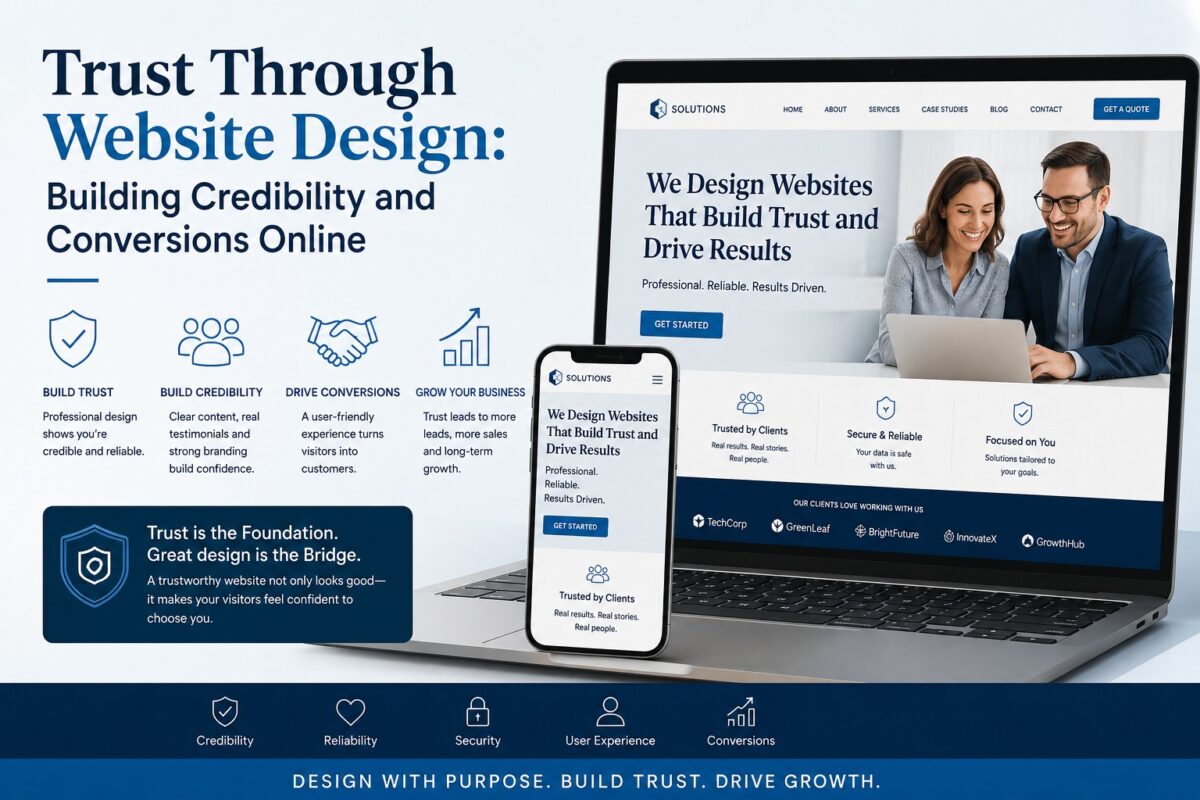
In today’s competitive digital landscape, a website is often the first interaction a potential customer has with your business. Within seconds of landing on your site, visitors begin making judgments about your credibility, professionalism, and trustworthiness.
For UK businesses, whether you’re an accountant in Birmingham, a law firm in Manchester, a dental clinic in London, or an e-commerce retailer serving customers nationwide, building Trust Through Website Design can significantly influence enquiries, conversions, and long-term business growth.
A professionally designed website does more than look attractive. It reassures visitors that they are dealing with a reputable business, reduces friction in the buying journey, and encourages prospects to take the next step.
Why Trust Matters Online
Unlike a physical business where customers can visit your premises, meet staff, and experience your brand firsthand, online visitors rely almost entirely on what they see on your website.
If your website appears outdated, difficult to navigate, or unprofessional, potential customers may leave before contacting you.
Trust directly impacts:
- Lead generation
- Conversion rates
- Customer confidence
- Brand reputation
- Search engine performance
- Customer retention
Businesses that successfully establish trust online often experience higher enquiry rates and stronger customer relationships.
First Impressions Happen Fast
Visitors typically form an opinion about a website within seconds. This means your design, branding, messaging, and user experience must immediately communicate professionalism.
Key factors influencing first impressions include:
- Visual appearance
- Website speed
- Mobile responsiveness
- Navigation structure
- Content quality
- Brand consistency
For example, a financial services company with a clean, modern design is far more likely to earn trust than one with outdated visuals and broken pages.
Use Professional and Consistent Branding
Strong branding is one of the foundations of Trust Through Website Design.
Your website should maintain consistency across:
- Colours
- Typography
- Logo placement
- Imagery
- Messaging
Consistent branding creates familiarity and reassures visitors that they are engaging with a legitimate, established organisation.
Businesses investing in professional web design and digital marketing services often achieve stronger brand recognition and customer confidence.
Display Clear Contact Information
One of the easiest ways to build trust is by making it simple for visitors to contact you.
Your website should prominently display:
- Phone number
- Email address
- Business address
- Contact forms
- Opening hours
Local businesses such as estate agents, recruitment agencies, healthcare clinics, and tradespeople particularly benefit from visible contact details because customers often want immediate reassurance that a real business exists behind the website.
Showcase Genuine Customer Reviews
Social proof remains one of the most powerful trust-building tools available.
Visitors often look for evidence that others have successfully worked with your business before making a decision.
Effective Trust Signals Include:
- Google reviews
- Client testimonials
- Case studies
- Industry awards
- Professional accreditations
- Client logos
For example, a law firm displaying positive client feedback and professional memberships can significantly improve trust among prospective clients.
Invest in High-Quality Photography
Authenticity matters. Stock photography can have its place, but genuine images often create stronger emotional connections.
Consider including:
- Your team
- Your office or premises
- Completed projects
- Products
- Customer interactions
A construction company showcasing completed developments or a dental clinic displaying its facilities helps visitors visualise the quality of service they can expect.
Prioritise Mobile-Friendly Design
Most website traffic now originates from mobile devices.
If your website performs poorly on smartphones or tablets, visitors may question the professionalism of your business.
A mobile-friendly website should:
- Load quickly
- Display correctly on all screen sizes
- Offer simple navigation
- Make contact options easy to access
- Provide readable content without zooming
Businesses seeking to improve user experience should ensure mobile optimisation forms part of their broader digital growth strategy.
Improve Website Speed
Slow-loading websites create frustration and reduce trust.
Research consistently shows that users expect pages to load quickly, particularly when searching for professional services.
Website speed impacts:
- User experience
- Conversion rates
- Bounce rates
- SEO performance
Whether you operate an e-commerce store, healthcare practice, or consultancy firm, website speed can directly influence business performance.
Create Clear Navigation
Visitors should be able to find information quickly and effortlessly.
Confusing navigation often leads users to abandon websites before taking action.
Effective navigation includes:
- Logical menu structures
- Clear page labels
- Visible service pages
- Accessible contact information
- Simple user journeys
For example, an accountancy firm should make it easy for visitors to locate services such as tax planning, bookkeeping, and business advisory support.
Publish Helpful and Relevant Content
Content demonstrates expertise.
When visitors find valuable information that addresses their concerns, they are more likely to trust your business.
Examples include:
- Industry insights
- Guides and resources
- Frequently asked questions
- Service explanations
- Educational blog posts
Businesses that regularly publish quality content often strengthen both trust and search engine visibility.
Strategic content marketing combined with professional website design can establish your business as an authority within its industry.
Use Security Signals Throughout the Website
Security is a major concern for online users.
Trust can be significantly improved by displaying recognised security indicators.
Important Security Elements
- SSL certificates (HTTPS)
- Privacy policies
- Cookie notices
- Secure payment gateways
- Data protection information
For e-commerce businesses, security assurances are particularly important during the checkout process.
Include Clear Calls to Action
Trustworthy websites guide visitors naturally towards the next step.
Strong calls to action should be:
- Visible
- Relevant
- Helpful
- Consistent
Examples include:
- Book a consultation
- Request a quote
- Speak with an expert
- Schedule a demo
- Contact our team
Clear calls to action reduce uncertainty and help visitors move confidently through the buying journey.
Build Industry-Specific Credibility
Different industries require different trust signals.
Professional Services
Law firms, accountants, and consultants should highlight qualifications, certifications, and professional memberships.
Healthcare Providers
Dental clinics, private healthcare practices, and wellness providers should showcase practitioner credentials, patient reviews, and treatment information.
E-commerce Businesses
Online retailers should focus on secure payments, customer reviews, delivery information, and return policies.
Construction and Trades
Project galleries, accreditations, and customer testimonials help demonstrate reliability and workmanship.
How BVS Digital Helps Businesses Build Trust Online
At BVS Digital, we understand that effective website design goes beyond aesthetics.
We help businesses create websites that build credibility, improve user experience, and generate measurable commercial results.
Our services include:
- Website design and development
- User experience optimisation
- SEO implementation
- Conversion rate optimisation
- Content strategy
- Brand positioning
Whether you operate locally or nationally, our team helps ensure your website becomes a powerful trust-building and lead-generation asset.
Contact BVS Digital to discuss how your website can better support business growth.
Conclusion
Building Trust Through Website Design is essential for businesses looking to attract, convert, and retain customers online.
From professional branding and clear navigation to customer reviews and mobile optimisation, every design element contributes to how visitors perceive your business.
For UK companies operating in competitive markets, a trustworthy website can become one of the most valuable tools for generating leads and driving sustainable growth.
Frequently Asked Questions
Why is trust important in website design?
Trust encourages visitors to engage with your business, submit enquiries, make purchases, and become long-term customers.
What website elements improve trust the most?
Professional design, customer reviews, security features, clear contact details, and high-quality content are among the most effective trust-building elements.
Does website design affect conversion rates?
Yes. A well-designed website reduces friction, improves user experience, and increases the likelihood of visitors taking action.
Can website design impact SEO performance?
Absolutely. Factors such as mobile responsiveness, page speed, user experience, and site structure all influence search engine rankings.