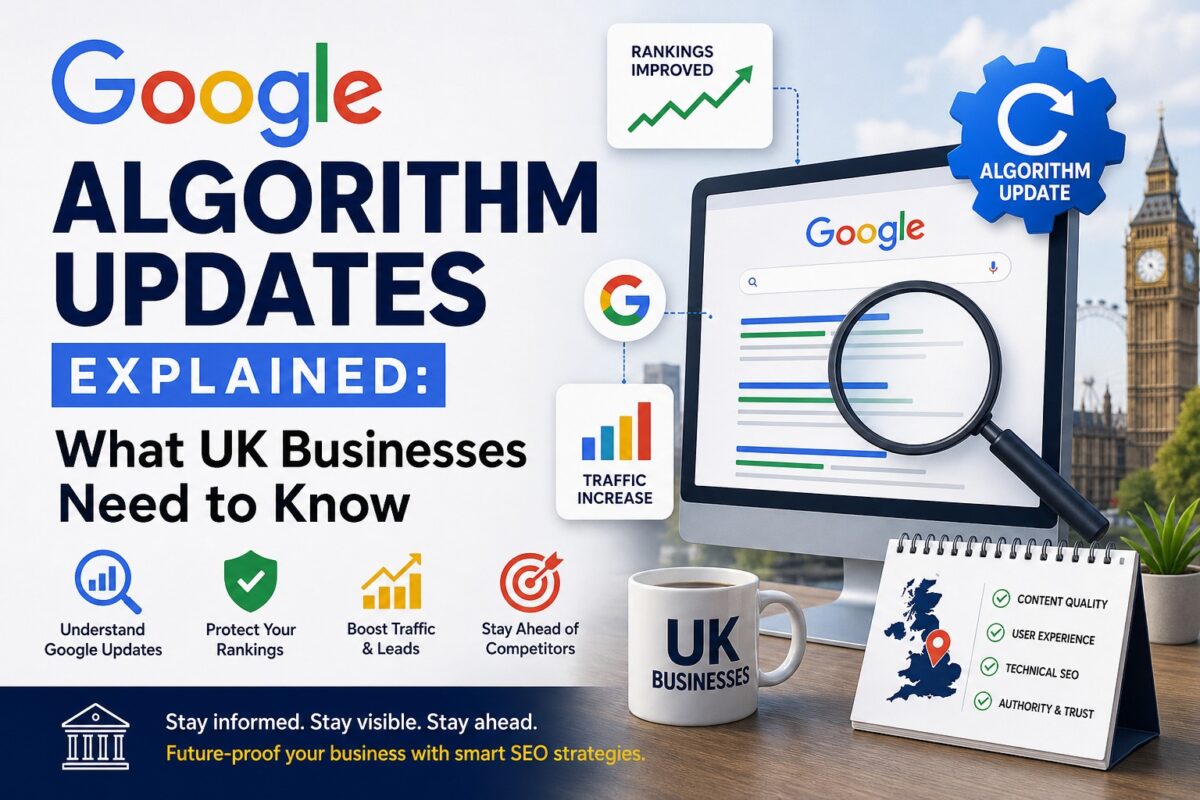
Search engine visibility can make or break a business in today’s competitive digital landscape. With Google constantly refining how it ranks websites, many UK business owners struggle to keep up. This is where Google Algorithm Updates Explained becomes critical—not just as a concept, but as a strategic necessity.
Whether you’re a London-based law firm, a Manchester e-commerce brand, or a Birmingham construction company, understanding how Google updates affect your rankings can directly impact your enquiries, leads, and revenue.
What Are Google Algorithm Updates?
Google’s algorithm is a complex system used to retrieve data from its search index and instantly deliver the best possible results for a query. Updates are changes made to improve the quality, relevance, and usability of search results.
These updates can range from minor tweaks to major core updates that significantly shift rankings across industries.
Types of Google Updates
- Core Updates: Broad changes affecting overall ranking systems
- Spam Updates: Target low-quality or manipulative practices
- Helpful Content Updates: Prioritise user-first, valuable content
- Product Review Updates: Focus on authentic, in-depth reviews
Understanding Google Algorithm Updates Explained helps businesses avoid sudden traffic drops and maintain consistent online performance.
Why Google Algorithm Updates Matter for UK Businesses
For UK SMEs and service providers, search visibility often drives the majority of inbound leads. A single update can:
- Reduce your rankings overnight
- Impact your website traffic
- Lower lead generation
- Give competitors an advantage
For example, a Leeds-based dental clinic relying on local SEO could see a drop in patient enquiries if their website fails to meet updated quality signals. Similarly, an e-commerce retailer in Bristol may lose product visibility if their content lacks depth or authority.
This is why Google Algorithm Updates Explained isn’t just technical—it’s commercial.
Key Ranking Factors Influenced by Updates
1. Content Quality and Relevance
Google prioritises content that demonstrates expertise, experience, authority, and trust (E-E-A-T). Thin or generic content is increasingly penalised.
2. User Experience (UX)
Page speed, mobile responsiveness, and site usability are essential ranking signals. A slow website can directly impact conversions.
3. Backlink Profile
High-quality, relevant backlinks remain a strong ranking factor, while spammy links can trigger penalties.
4. Search Intent Alignment
Google rewards websites that match user intent—whether informational, navigational, or transactional.
Businesses investing in strategic digital marketing services are better equipped to adapt to these evolving ranking factors.
How Algorithm Updates Impact Different Industries
Professional Services (Law Firms & Accountants)
Updates often prioritise authoritative content. Firms with detailed service pages and legal insights tend to rank higher than generic websites.
Healthcare & Clinics
Medical-related updates demand high trust signals. Clinics in cities like Glasgow or Sheffield must ensure content accuracy and credibility.
E-commerce Businesses
Retailers need optimised product descriptions, strong reviews, and technical SEO to maintain rankings during updates.
Trades & Construction
Local SEO plays a major role. Updates affecting local search can significantly impact visibility for builders, electricians, and contractors.
This is where working with a specialist SEO consultancy becomes essential.
Signs an Algorithm Update Has Affected Your Website
- Sudden drop in organic traffic
- Ranking fluctuations for key keywords
- Decrease in leads or enquiries
- Changes in search visibility across locations
If your Manchester-based recruitment agency suddenly loses page-one rankings, it’s likely tied to a recent update rather than random performance issues.
How to Protect Your Website from Algorithm Changes
Focus on Long-Term SEO Strategy
Avoid shortcuts. Sustainable SEO focuses on quality, not manipulation.
Regular Content Updates
Keep your website fresh with relevant, valuable content aligned with user needs.
Technical SEO Audits
Ensure your website is fast, secure, and technically sound.
Build Authority
Earn backlinks through PR, partnerships, and high-quality content.
For businesses seeking consistent growth, investing in SEO services ensures long-term resilience against algorithm changes.
What UK Businesses Should Do After an Update
Reacting strategically is key. Instead of making drastic changes:
- Analyse performance data
- Identify affected pages
- Improve content depth and relevance
- Enhance user experience
For example, a Liverpool-based estate agency might improve property listings with richer descriptions, better imagery, and local insights to recover rankings.
Why Partner with BVS Digital?
Understanding Google Algorithm Updates Explained is only the first step. Execution is what drives results.
BVS Digital works with UK businesses across industries to:
- Monitor algorithm changes
- Adapt SEO strategies proactively
- Improve rankings and visibility
- Generate consistent, high-quality leads
Whether you operate in London, Birmingham, or nationwide, having a data-driven SEO partner ensures your business stays competitive.
Take Control of Your Search Performance
Google will continue to evolve—and so should your strategy. Businesses that understand and adapt to algorithm updates gain a significant competitive advantage.
Ready to future-proof your SEO?
Contact BVS Digital today and build a strategy that works—regardless of Google updates.
Conclusion
Search rankings are no longer static. With constant changes shaping the digital landscape, UK businesses must stay informed and proactive. By fully understanding Google Algorithm Updates Explained, you can protect your visibility, maintain traffic, and drive sustainable growth.
Frequently Asked Questions
How often does Google update its algorithm?
Google makes thousands of minor updates annually, with several major core updates each year that significantly impact rankings.
Can algorithm updates negatively impact my business?
Yes, especially if your website doesn’t align with Google’s quality guidelines. However, strong SEO practices can minimise risks.
How long does it take to recover from an update?
Recovery can take weeks or months, depending on the severity of the impact and the improvements made.
Should I change my website immediately after an update?
No. Analyse data first, identify issues, and make strategic improvements rather than reacting impulsively.