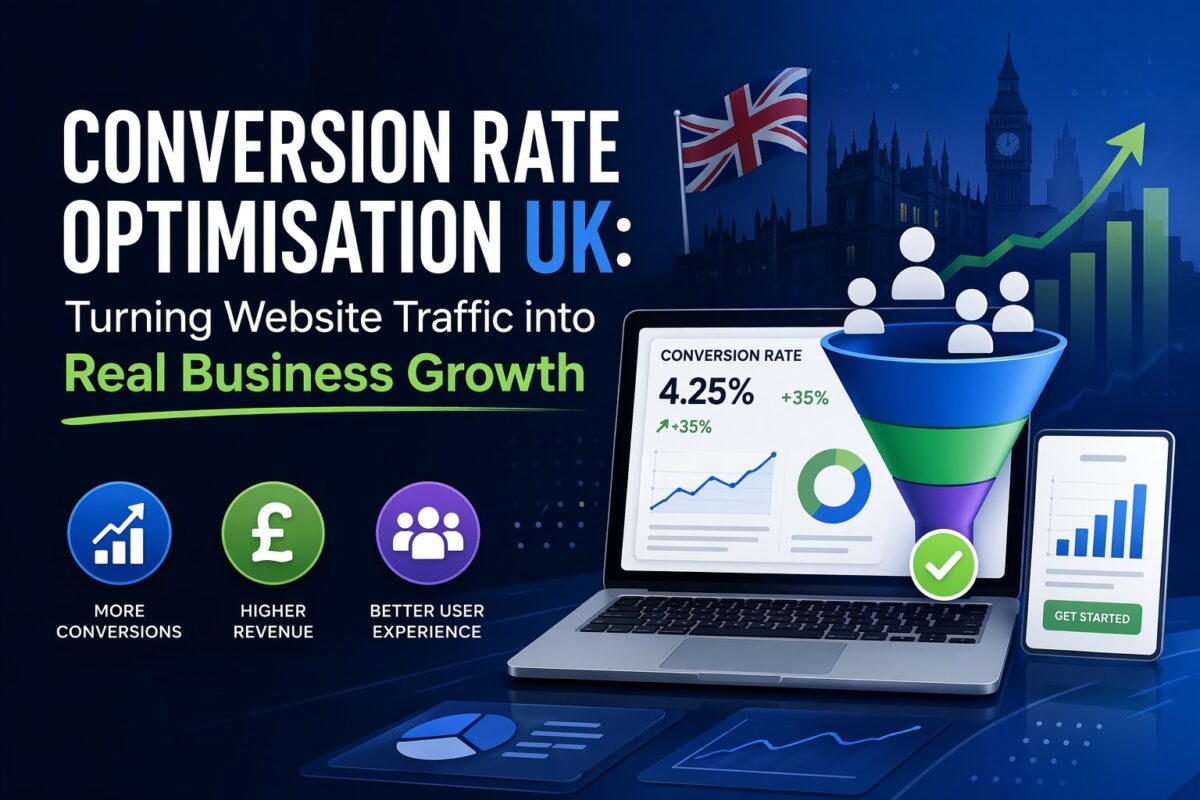
For many UK businesses, driving traffic is no longer the biggest challenge—turning that traffic into paying customers is. This is where Conversion Rate Optimisation UK becomes critical. Whether you’re a law firm in London, an e-commerce brand in Manchester, or a dental clinic in Birmingham, improving your conversion rate directly impacts your bottom line.
Instead of spending more on ads or SEO alone, smart businesses focus on maximising the value of existing visitors. Conversion Rate Optimisation (CRO) is the process of refining your website and digital journey to increase the percentage of users who take action—whether that’s filling out a form, booking a consultation, or making a purchase.
What is Conversion Rate Optimisation UK?
Conversion Rate Optimisation UK refers to the systematic improvement of website performance to increase conversions from UK-based traffic. It combines data analysis, user behaviour insights, and testing to improve how users interact with your website.
For example:
- A recruitment agency in Leeds improving CV submission rates
- An estate agent in London increasing property enquiry forms
- An e-commerce store in Bristol boosting checkout completion rates
Each of these scenarios involves identifying friction points and optimising them for better outcomes.
Why CRO Matters for UK Businesses
UK businesses operate in highly competitive digital markets. Whether you’re running PPC campaigns or investing in SEO, traffic alone doesn’t guarantee revenue.
Here’s why CRO is essential:
- Maximises ROI: Get more value from existing traffic
- Reduces acquisition costs: Improve efficiency of marketing spend
- Enhances user experience: Better journeys lead to higher trust
- Drives measurable growth: Every improvement directly impacts revenue
For example, a construction company in Sheffield running Google Ads may increase leads by 30% simply by improving landing page clarity—without increasing ad spend.
Key Elements of Conversion Rate Optimisation UK
1. User Behaviour Analysis
Understanding how users interact with your website is the foundation of CRO. Tools like heatmaps and session recordings reveal where users drop off.
A UK-based dental clinic might discover users abandon booking forms due to too many required fields.
2. Landing Page Optimisation
Your landing pages must align with user intent. If a user clicks an ad for “emergency dentist London,” the landing page must immediately address that need.
Key improvements include:
- Clear headlines
- Strong calls-to-action
- Trust signals (reviews, certifications)
- Fast load speeds
Explore how digital marketing services can support your CRO strategy.
3. A/B Testing
A/B testing allows businesses to compare different versions of a page to determine which performs better.
For example, an e-commerce brand in Liverpool might test:
- Different product page layouts
- CTA button colours
- Pricing display formats
Small changes can result in significant increases in conversion rates.
4. Mobile Optimisation
With a majority of UK users browsing on mobile, your website must deliver a seamless mobile experience.
Common CRO improvements include:
- Simplified navigation
- Click-to-call buttons for service businesses
- Fast-loading pages
For service-based businesses like plumbers or electricians, mobile optimisation can dramatically increase call enquiries.
Industry-Specific CRO Applications
Legal & Professional Services
Law firms and accountants rely heavily on trust. CRO strategies include:
- Prominent testimonials
- Clear service breakdowns
- Simple enquiry forms
E-commerce Brands
Online retailers benefit from:
- Optimised product pages
- Streamlined checkout processes
- Urgency triggers (limited stock, offers)
Healthcare & Clinics
Dental and aesthetic clinics in cities like London and Manchester can improve conversions through:
- Online booking systems
- Before-and-after galleries
- Clear pricing transparency
Construction & Trades
For trades businesses, CRO focuses on:
- Quick quote forms
- Local trust signals
- Easy contact options
Integrating CRO with SEO strategies ensures both traffic and conversions improve simultaneously.
Common CRO Mistakes UK Businesses Make
- Focusing only on traffic: Ignoring conversion performance
- Overcomplicated websites: Too many steps reduce conversions
- Lack of testing: Making assumptions without data
- Poor mobile experience: Losing high-intent users
A Manchester-based SaaS company, for example, may lose leads due to unclear pricing or complex onboarding processes.
How Conversion Rate Optimisation UK Drives Revenue
Let’s consider a practical scenario:
An estate agency in London receives 5,000 monthly website visitors. With a 2% conversion rate, they generate 100 leads. By improving CRO and increasing conversions to 4%, they double leads to 200—without increasing traffic.
This is the power of Conversion Rate Optimisation UK.
Integrating CRO with Your Digital Strategy
CRO should not exist in isolation. It works best when integrated with:
- PPC campaigns for targeted traffic
- SEO for long-term visibility
- Web design for improved user experience
A cohesive strategy ensures that every visitor has the highest possible chance of converting.
Why Work with a CRO Agency?
Many UK businesses lack the time or expertise to implement effective CRO strategies. Partnering with a specialist agency ensures:
- Data-driven decision making
- Continuous testing and optimisation
- Improved ROI across all marketing channels
If you’re serious about improving conversions, get in touch with BVS Digital to explore tailored CRO solutions.
Conclusion
Conversion Rate Optimisation UK is no longer optional—it’s a necessity for businesses looking to grow efficiently. By focusing on user behaviour, testing, and continuous improvement, UK businesses can unlock significant revenue gains without increasing marketing spend.
Whether you’re a local service provider or a national e-commerce brand, CRO gives you a competitive edge in today’s digital landscape.
Frequently Asked Questions
What is a good conversion rate for UK websites?
Conversion rates vary by industry, but most UK businesses aim for 2–5%. CRO strategies can significantly improve this over time.
How long does Conversion Rate Optimisation take?
CRO is an ongoing process. Initial improvements can be seen within weeks, but long-term optimisation delivers the best results.
Is CRO suitable for small businesses?
Yes, CRO is highly effective for SMEs. Even small improvements can lead to noticeable increases in leads and sales.
How does CRO differ from SEO?
SEO focuses on driving traffic, while CRO focuses on converting that traffic into customers. Both should work together for maximum impact.